
RWS Group & Liebherr
Trusted by a global SEO agency to inform content positioning for an enterprise manufacturer (Liebherr): proof that my keyword research stands up next to in-house teams at billion-dollar brands.
Overview
Client: RWS Group
End-Client: Liebherr
Project: Keyword research & technical audits related to "NoFrost" technology
Engagement: Began in May 2023, ad-hoc assignments
Role: SEO Consultant
The Challenge
Branded vs. Non-Branded Keyword Gaps
RWS recognized that many prospective fridge buyers might not know the "NoFrost" brand name, searching instead for general queries like "frost-free refrigerator benefits." We needed to highlight these terms to capture broader user intent.
Liebherr also needed to maintain strong coverage of "Liebherr NoFrost" specifically, ensuring brand-loyal or brand-aware visitors found relevant product pages.
Data-Backed Content Marketing
Beyond product pages, RWS wanted suggestions for blog or FAQ content that would educate potential buyers about how NoFrost works, how it differs from competitor solutions, and why it matters for everyday usage.
Technical Audits
RWS also requested ad-hoc site checks or technical audits to catch indexing issues, competitor references, or any potential on-page optimizations (meta tags, headings, structured data) that might help Liebherr outrank rival fridge manufacturers.
Files & Deliverables
Keyword Research Spreadsheets
The Excel files contained the full search terms, volumes, CPC data, competitor rank insights, and notes on recommended usage for UK and BG markets.
SEO Documentation
Provided a refined approach on how to weave keywords into headings, subheadings, and body content while preserving a user-friendly flow.
Featured recommended H1/H2 tags, suggested text for e.g. "NoFrost vs. SmartFrost," as well as an FAQ section.
Technical Site Audit Notes
Although less formal than the spreadsheets or doc, I shared a short summary with RWS on potential on-page or indexing adjustments, like ensuring each NoFrost sub-page had correct meta tags and competitor brand references were approached carefully.
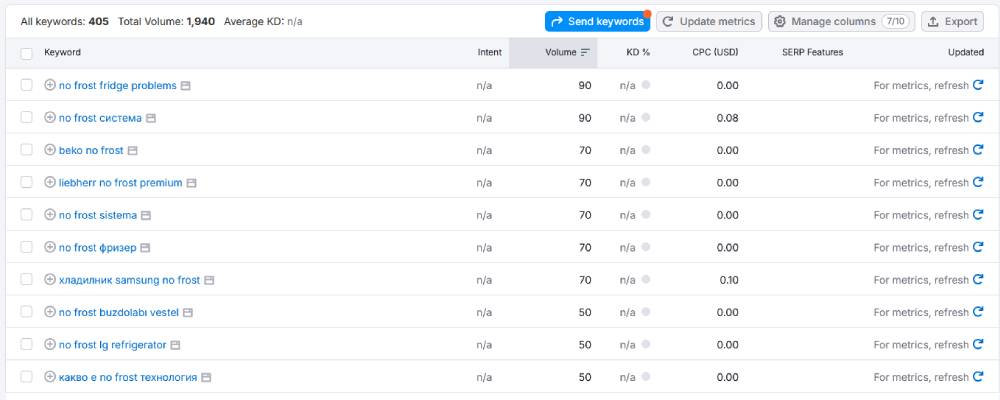
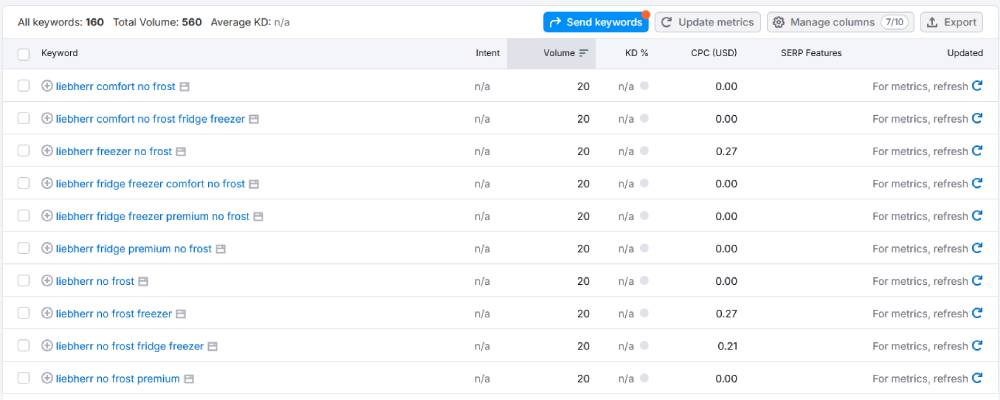
BG keyword research - Semrush data (1/2)
Approach & Strategy
Keyword Segmentation: Branded vs. Generic
I grouped queries into "Liebherr-specific" vs. "frost-free fridge" terms to see how many searchers intentionally sought "NoFrost" brand references vs. general knowledge.
Competitor & SERP Insights
I discovered user queries referencing "Samsung frost-free," "Bosch NoFrost," etc. This signaled that consumers often compare brand solutions, an opportunity for content that positions Liebherr's NoFrost as distinct.
Topical Gaps & Content Proposals
Common queries like "How does NoFrost compare to manual defrost?" or "Is NoFrost worth it?" indicated an educational gap. I recommended blog topics:
- "NoFrost 101: Why It Matters"
- "NoFrost vs. Frost-Free: Key Differences"
- "Troubleshooting Common Myths Around NoFrost"
Technical Audit Touchpoints
Confirmed each recommended page or blog used meta tags referencing top search terms, spelled out in your doc.
Encouraged a short "FAQ" section for user queries about "NoFrost vs. SmartFrost," "How to Defrost an older fridge," etc. to capture snippet features.
Results & Impact
Clear Content Map
RWS used the final keyword spreadsheets to propose new blog entries, an FAQ expansion, and a dedicated "NoFrost vs. other tech" page for Liebherr.
Expanded Brand Positioning
By addressing competitor names and synonyms, Liebherr started to appear in more "compare" or "versus" queries, where potential customers weigh multiple brands before deciding.
This approach strengthened Liebherr's stance as a top-tier option for no-frost fridges and freezers.
Key Takeaways
- Comprehensive Keyword Insights Drive Content - By dissecting brand vs. non-brand queries, you can meet unknown consumers where they search-especially around synonyms or competitor references.
- Competitive SERP Analysis - If you see brand cross-mentions in queries (like "NoFrost vs. competitor"), treat it as an opportunity to showcase your brand's unique selling points and create targeted "versus" or "compare" pages.
- Localization & Translation - Languages matter. "NoFrost" might be universal, but sub-queries like "Wie funktioniert NoFrost?" or "Was ist SuperFrost?" are location-specific. High-level research ensures each region's content is relevant, factual, and discoverable.
- Data-Driven Creativity - Raw numbers from spreadsheets must transform into user-friendly stories-educational blog posts, "versus competitor" resources, and meaningful product page improvements. That's how you truly leverage keyword insights.
Final Thoughts
My involvement with RWS Group for Liebherr's NoFrost technology showcased how robust keyword research can fuel content strategy, balancing brand-specific terms ("NoFrost," "SuperFrost") and more generic "frost-free fridge" queries.
By sifting through synonyms, competitor references, and user-intent-based volumes, we paved the way for blog content and product pages that speak to real consumer questions.
Related Insight
Zero-click didn't kill research, it moved your buyer's Moment of Truth
Zero-click search moved the buyer's moment of truth off your website. Here's how to stay visible where people research and decide.
Read article →Do You Want to Work With Me?
I'm here to bring a hands-on approach, data-driven insights, and dedication to delivering measurable results - reach out anytime.