
The Daily Copywriter
Matched a full-time salary in a single month freelancing on Fiverr: the earliest proof that the marketing skill set was commercially valuable on its own, followed by years of 5-star technical work for Upwork clients.
Overview
Platform: Fiverr
Industry: Freelance Copywriting & Content Creation
I first dipped my toes into freelance copywriting on Fiverr while juggling a full-time marketing role at a software company in Bulgaria in 2014. Back then, I imagined I'd pick up a few side gigs, earn some extra cash, and call it a day. But before long, I was neck-deep in client requests, hustling at midnight to craft email campaigns for complete strangers. I reached a breaking point (some might call it a breakthrough) when I realized I'd earned $1,000 in a single month, essentially matching my full-time salary. That was my neon sign screaming, "Go for it!"
Project Highlights
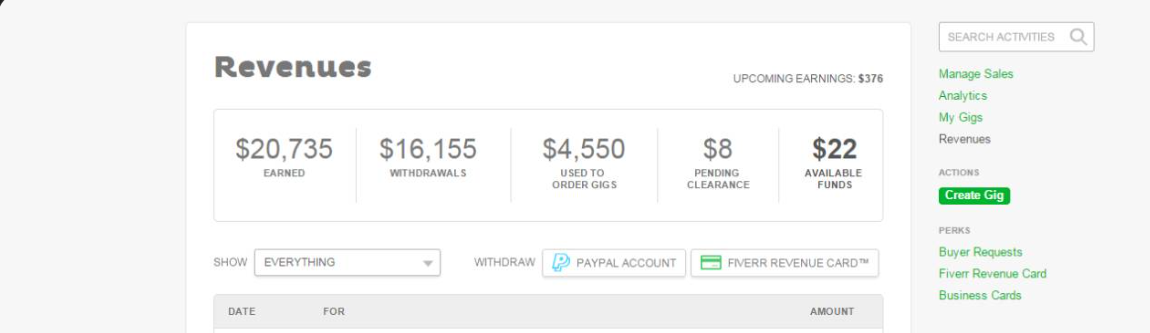
- Built a successful freelance copywriting profile earning $20,000+ annually.
- Scaled from solo freelancer to managing a 6-person freelance team (The Daily Copywriter).
- When I left for a career at sea, connected the team with a client's content department.
- Key skills developed: client communication, project delegation, and scaling small businesses.
Taking the Leap
Year: 2017
Paycheck Comparison: $1,000 from Fiverr (on nights/weekends) = My entire monthly salary
I decided to resign from my corporate gig and go all in on Fiverr. Yes, it was risky, but I discovered that getting to work for different brands (from e-commerce shops looking for catchy newsletters to an actor wanting to message casting agents) was far more captivating than a standard 9-to-5 routine.
Favorite Gigs:
- Writing promotional emails for big email lists
- Scripting monthly newsletters
- Ghostwriting short e-books (including cooking ones that I sometimes tried at home: talk about perks!)
Finding My Groove on Fiverr
The Early Struggles
When I first set up my Fiverr profile in 2014, I heard crickets for months. Zero orders, zero messages. I moonlighted by writing for friends and family, which confirmed I did enjoy copywriting. But with Fiverr, it was radio silence.
The Optimization Phase
- Profile Makeover: I added a friendly headshot. Apparently, it helps people connect with you more than a random stock image.
- Bio & Gig Descriptions: I used every inch of text space to highlight exactly what I do, who I help, and why I'm awesome (while staying modest-ish).
- Pricing Strategy: At first, I offered a 500-word blog post for $10. Later, I hiked it to $175 once I had a stack of five-star reviews.
The Result
Orders started trickling in. A review here, a second order there, and eventually, I was fully booked. It was the "I can't believe I'm doing this!" moment that made me see genuine potential in freelancing.
Making $20,000 in a Year, and Missing Holidays
Year: 2017
Why: My strongest year on Fiverr, netting over $20,000.
Downside: I practically skipped vacations, but hey, it taught me about hustle, discipline, and creating a sustainable schedule (or at least trying to).
By then, I'd become pickier about projects. No more random e-books in languages I barely spoke. Instead, I focused on marketing emails, brand bios, blog posts, and the types of copy I could really deliver with flair and confidence.
Scaling (aka The Daily Copywriter Is Born)
The Overload
By 2017, I was receiving more Fiverr orders than one human could handle, especially one who values normal sleeping hours. My queue overflowed, and my delivery timers were blinking red. My options were either cancel orders or scale up.
The Decision to Build a Team
I was both excited and petrified by the prospect of leading others. Plus, I was still dabbling in a maritime career (I know, a complete 180 from copywriting) and felt torn between these two worlds.
Ultimately, I built a bench of six freelancers. Not all at the same time: I gave each of them the work they handled best, and every one of them was battle-tested. Some were my people for tight deadlines, some for tricky topics, some for lower-budget orders. With me at the helm, we juggled daily gigs on Fiverr. This is how "The Daily Copywriter" came to life, even before I'd registered a formal company.
What I Learned
Nothing on a larger scale is truly solo, and no single person holds up every time. Sooner or later, anyone misses a deadline. So I stopped relying on one person and built a bench I'd tested in different scenarios. I overcame my reluctance to rely on others. We soared through project after project, piling up reviews and repeat clients.
Letting the Team Go, and the Long Way Back
The Offer
By 2018, I was losing traction. Orders slowed, and I stopped taking new work on Fiverr. Around then, one of my clients asked whether I'd bring myself and my part-time helpers into their content department.
My Decision
I said no. I wanted to build a career at sea. So I talked to my teammates and connected them with the client instead. Some of them stayed and worked there, others moved on. I left for my first contract, and The Daily Copywriter ended there.
Coming Back
In December 2021 I came back ashore for good, done with the sea. I kept thinking about that offer: a company had wanted me and my team. That was the push to return to digital marketing. I went the conventional way first and spent a year as SEO Lead at Flat Rock Technology, then left to build my own agency, 4 Pillars Digital, on four pillars: Positioning, Presence, Participation and Performance.
The Freelance Thread That Kept Going: Upwork (2016 - 2025)
The Daily Copywriter ended, but freelancing didn't. I'd had an Upwork profile since 2016, running alongside Fiverr. In 2020, between contracts at sea, Upwork became my main freelancing platform, and over the next five years the work moved from copywriting into technical marketing.
Starting Over at the Bottom
New platform, no reviews. My first Upwork job paid $5 before fees, and I started at $15 an hour. That rate attracted bargain hunters, but it also stacked up five-star reviews fast, and on Upwork early social proof is everything. Once the reviews were there, I raised my rate and started screening jobs by client history, budget and communication style instead of applying to everything.
Going Technical: Google Ads, GA4 and GTM
I moved toward the work that matched my technical marketing skills:
- Google Ads audits: many clients had little oversight of their ad accounts, with wasted spend, missing negative keywords and poor campaign structure.
- GA4 migrations: as Universal Analytics approached its sunset, requests surged for new data streams, conversion setup and property configuration.
- GTM setups: making sure tags fired correctly for GA4 events, conversion tracking, consent management and multi-platform setups.
- SEO consulting: kept for longer engagements and clients who wanted a multi-channel approach.
Some of the GTM workspaces I configured for clients:
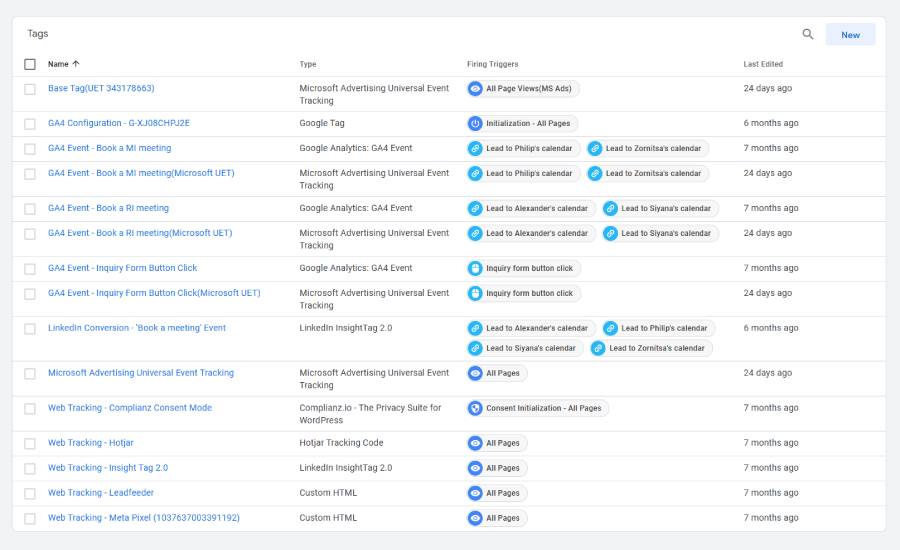
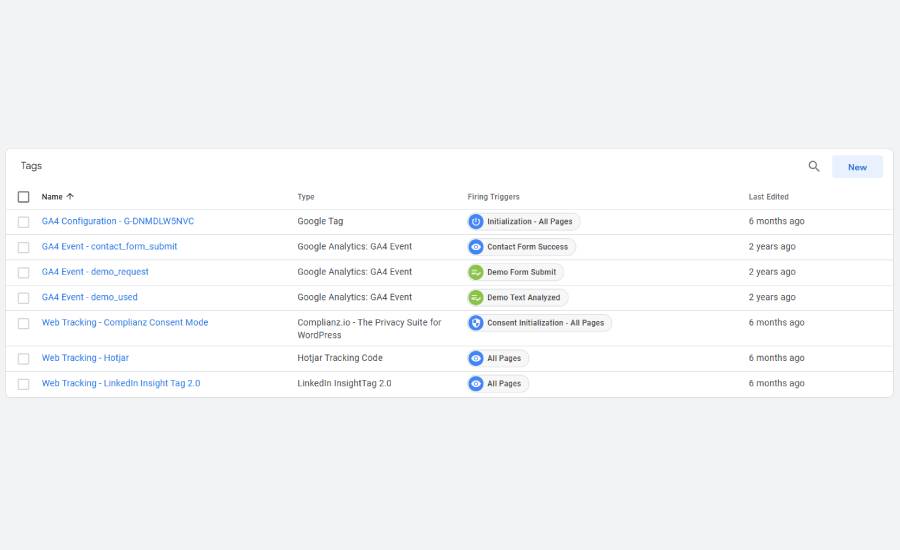
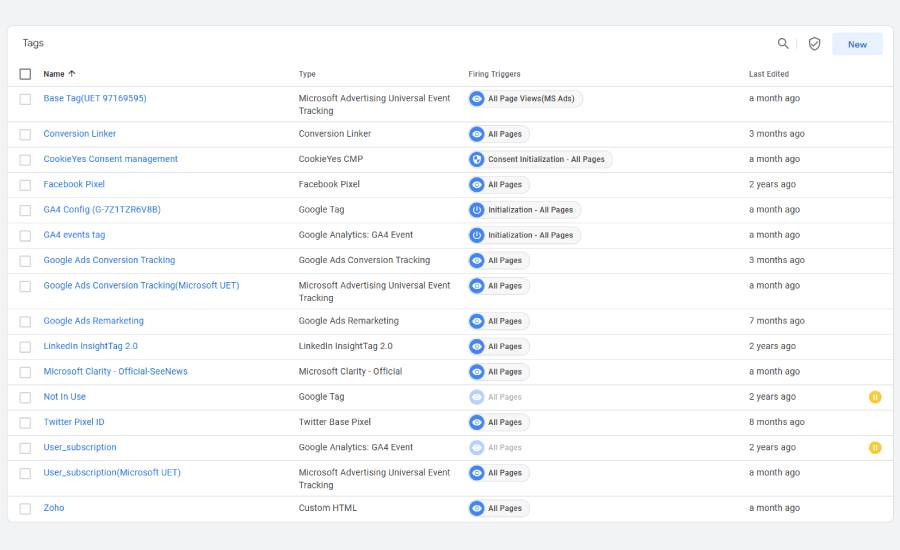
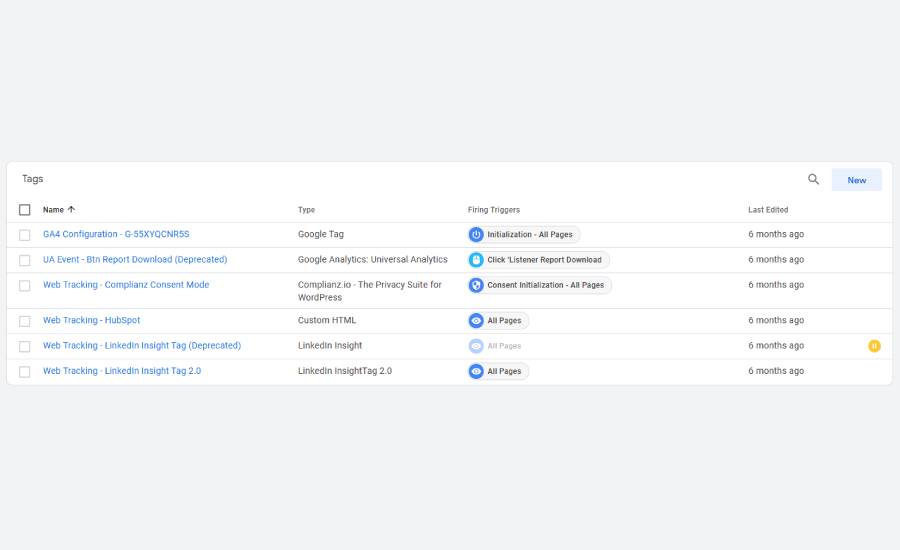
GTM workspace with GA4 events, Microsoft Ads, and consent management (1/4)
Building my profile around PPC audits, GTM event setups and GA4 migration brought clients who were looking for exactly those skills. Positive feedback brought more invitations, even when I wasn't the cheapest option. A few of the reviews:
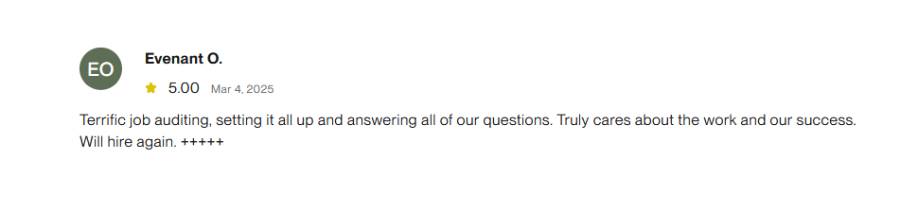
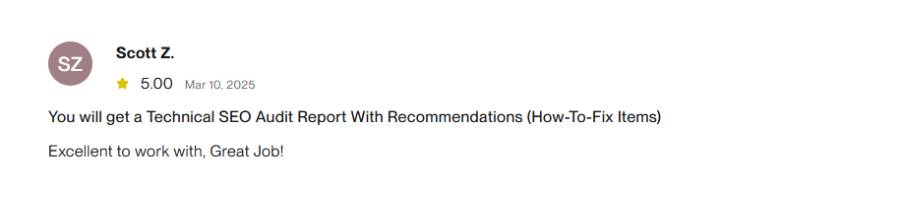
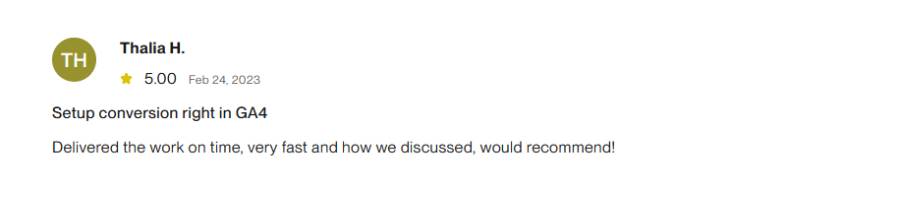
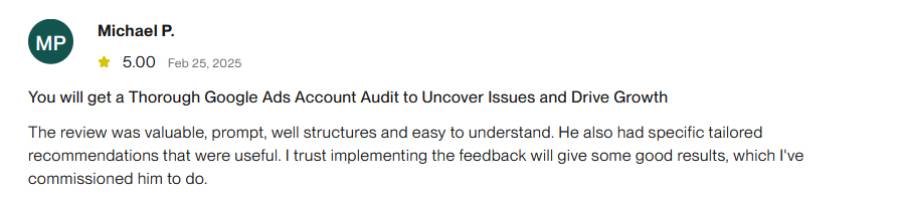
5-star review from Evenant O.: GA4 auditing and setup, March 2025 (1/4)
A Longer Engagement: SageData (2020 - 2021)
Not every freelance job in those years was a one-off. For about a year, between contracts at sea, I did copy and SEO work for SageData, a modular business intelligence platform: refined sales landing pages and brand messaging, an SEO audit, 10 blog topics and promotional YouTube scripts. It was my first longer stretch of B2B SaaS marketing, and it showed me how much clearer messaging matters when the product is technical.
After I came back ashore, I kept the profile active for selective technical projects alongside my full-time work and 4 Pillars Digital, until 2025.
Key Takeaways
- Start Small, Then Grow: Low prices and "yes-man" attitude at the start can jumpstart your reviews and client loyalty. Later, you can refine your niche and pricing.
- Communication is Gold: Asking the right questions upfront prevents headaches later. Clear instructions, a friendly demeanor, and timely updates do wonders for your reputation.
- Freelancing Can Outgrow You: When your queue floods, think about scaling or brand-building. You can't do it all alone forever (or at least not without losing all your weekends).
- Choose Your Ending: When a client offered to take my team in-house, I chose the sea, and made sure the people who had worked with me had somewhere to go. An ending you choose beats one that happens to you.
- Specialize to Get Paid More: On Upwork, moving from general copywriting to Google Ads audits, GA4 and GTM is what made better rates possible. Generalists compete on price; specialists get invited.
- The Next Chapter: Years later, that offer is what brought me back to marketing. 4 Pillars Digital now connects SEO, content, email and paid media into one system.
Final Thoughts
My Fiverr adventure began in 2014 with a simple profile and rock-bottom gig prices. Over time, that hustle evolved into The Daily Copywriter, a mini agency that thrived on volume, good reviews, and unrelenting commitment to quality. It ended when I chose the sea over a client's offer to take my team in-house. Years later, that same offer brought me back to marketing, and eventually to 4 Pillars Digital.
If there's one overarching lesson, it's that freelancing can be more than a side gig: it can be a launchpad for leadership, entrepreneurial ventures, and brand-building. Don't be afraid to pivot, scale, or close a chapter on your own terms.
Do You Want to Work With Me?
I'm here to bring a hands-on approach, data-driven insights, and dedication to delivering measurable results - reach out anytime.